
What is “Nature-based”?
Birches School is located in Lincoln on four acres of private woodlands where we work, investigate, and play each day. Our campus has several outdoor classrooms, a woodland play space, and rocks for climbing. Birches is also directly adjacent to acres of pristine conservation land with miles of trails to explore leading to deCordova Museum and Sculpture Park and even Walden Pond. These multi-purpose outdoor spaces support our K-8 school with places for independent work, read alouds, performances, scientific research, play, and quiet reflection.
Birches believes that quality academic experiences are achieved through project-driven units, inside and outside the classroom. Most of our academic time is spent inside the classroom but nature drives many of our unit themes, encouraging stewardship, exploration and appreciation of our natural world. Our faculty and students also just enjoy being outside and all students spend time outside every day. We engage in activities from nature journaling and gardening to igloo building, tree climbing, trail running, and more. Our partnership with the Lincoln Land Conservation Trust leads to curricular and community opportunities such as existing work on pollination systems.

Nature Play
Birches students enjoy the outdoors, particularly the woods and wetlands, in a variety of ways. All children, and particularly our youngest classes, love Nature Play--an opportunity to explore, run, climb, and play in the woods. These times are open-ended: some children engage in dramatic play, concocting marvelous plots for their woodland adventures. Others seek physical challenges, practicing balancing on logs and climbing trees. Curious children can always be found investigating the crevices of a rock wall, observing critters, or inspecting a spider’s delicate web.
As students get older, playing and exploring in the woods is still an integral part of their Birches experience, but they also practice nature journaling, animal and plant identification, longer hikes, and different weekly Exploration classes in the woods.
Wilderness Class
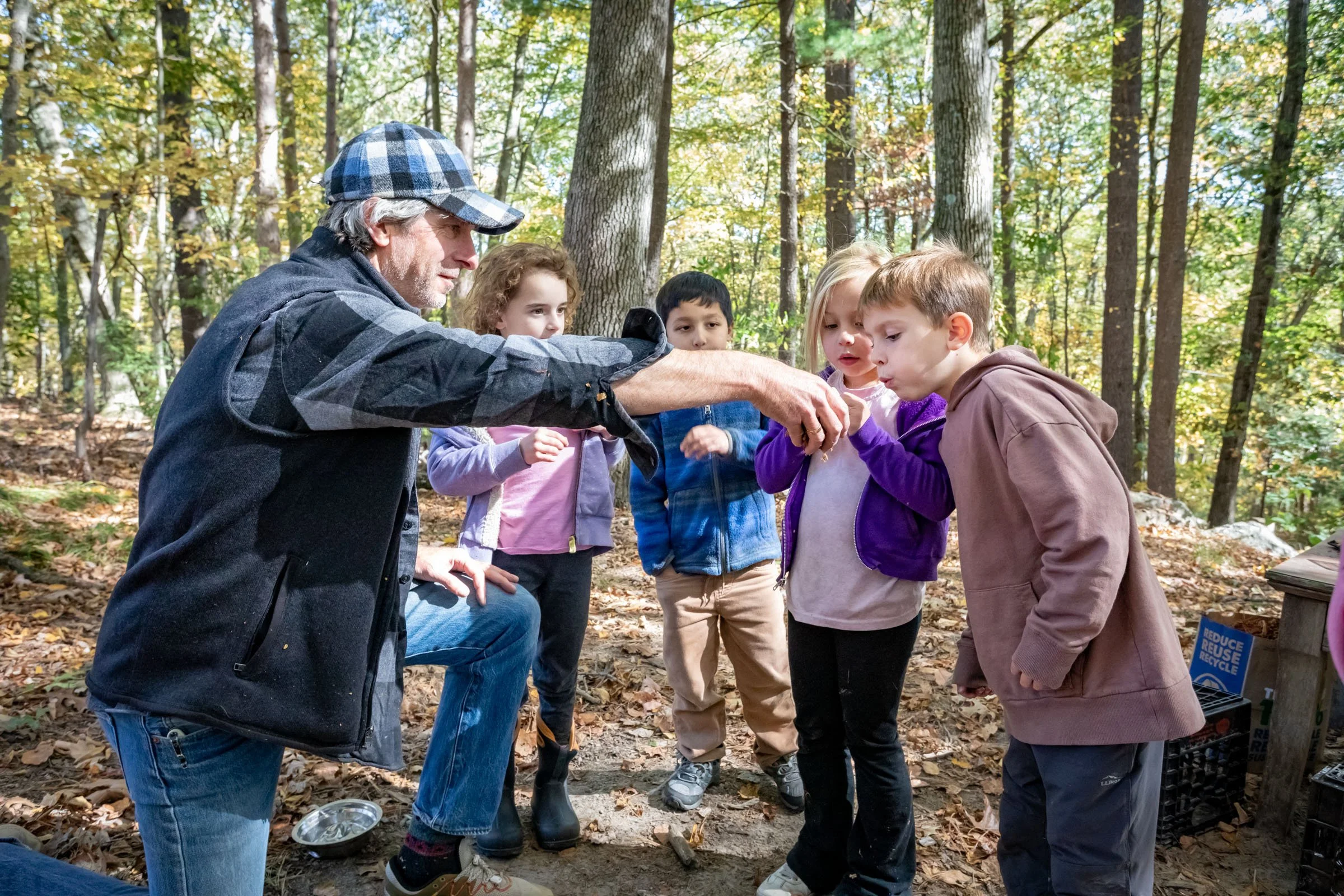
While play is an essential part of students’ experience in the natural world, they are also building wilderness competencies with grade-level goals and skills. Our youngest class learns to build and cook with fire, making tinder bundles, identifying types of wood, and harvesting and processing acorns for a Birches favorite treat, Acorn Pancakes! 2-3 students build on their K-1 experience to pass Fire Tender Training and learn knife safety and carving techniques in preparation for their campout. The 4-5s work toward the rite of passage of camping out with their teachers, learning all about fire, food, and shelter; they build a debris shelter together and plan every aspect of their overnight.
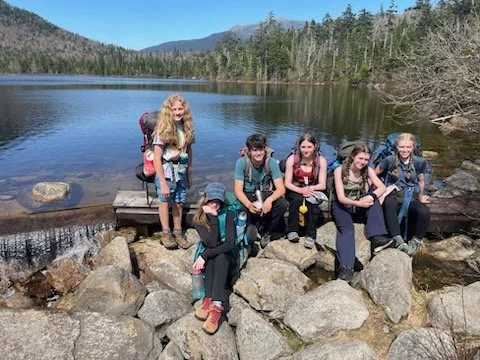
The 6th grade dives into environmental stewardship, continuing our partnership with the American Chestnut Foundation to plant, grow, and nurture hybrid chestnuts both on and off campus. 6th graders deepen their camping skills, making a lean-to, learning knots and tent preparation, and broadening their repertoire for open fire cooking. The culminating wilderness experience for 7th and 8th graders is a multi-day backpacking trip. Students learn mapping and orienteering, wilderness first aid, and identification of wild edibles and medicinal plants. Their “final exam” for wilderness class is specializing in fire, food, shelter, or water on the trip with their peers. Through our K-8 Wilderness classes, Birches students develop self-reliance, leadership, and confidence alongside their environmental literacy and stewardship.

Nature Journaling
Birches students use journaling to blend observational drawing and writing. Nature journaling allows students to zoom in on details about plants, animals, and the environment. Through prompts that integrate art, science, and language arts, students develop important skills in gathering information, making careful observations, and documenting their thoughts, while out in the field.
Students use a variety of tools from pencils and water colors to iPads for documenting their observations. Journaling includes - weather conditions, animal and plant life, poetry, artwork and further research questions. A student might ask “Does this tree know its surroundings?” For younger students, inquiry can turn into teacher-led mini-lessons, and for older students, a research question can be assigned as homework with a presentation later to share with the class.
“Birches School seamlessly integrates a robust academic program in harmony with nature and builds a strong sense of community along the way. Each day, week and season are planned with great care to guide the children through the natural cycles, always fresh and giving the children something to get excited about and look forward to. Our kids love Birches, come home with full cups and lots to share, and do not even realize how much they have grown academically until they stop to look back.”